Manufacturing Production Solutions

Cobots enable effective high-mix, low-volume production

With increased competition, often on a global scale, manufacturers need to differentiate themselves by tailoring products more closely to customer demand.

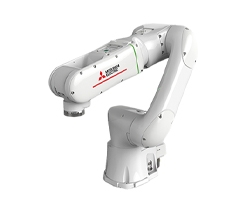
This, of course, carries with it an implicit reduction in batch sizes and has seen the rise of ‘high-mix, low-volume production. Cobots can enable manufacturers to effectively meet individual customer requirements with greater product variety in smaller batches. Oliver Giertz, Product Manager for Servo/Motion and robotics for the EMEA region at Mitsubishi Electric, Factory Automation, explains how collaborative robots are helping manufacturers to increase flexibility, boost quality, and drive down operational costs.

While high-volume production, with its repetitive tasks, has seen increased adoption of traditional industrial robots, we have to think differently in a high-mix production environment where the programming and reconfiguration effort to change from one product to the next can impact on productivity. In high-mix production, there might be several line changeovers needed in a given shift.
Digital networking

In today’s Industry 4.0 era, digitalisation and networking are rapidly gaining ground to make manufacturing more efficient, flexible and cost-efficient.

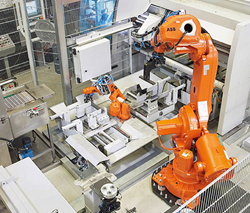
Manually-operated islands of production are giving way to continuously controlled, intelligent material flow whereby all elements communicate with each other autonomously. Similar is happening in computer controlled storage and metal sawing, which are often the first two processes in a factory.

The use of mobile devices is also gaining ground in industrial production. With this in mind, Kasto has introduced a new application, KASTOapp, to facilitate remote visualisation of its sawing machines on a shop floor. The app displays the operational status of all networked machines equipped with the manufacturer’s proprietary SmartControl, AdvancedControl, ProControl or ExpertControl systems. 

Cobots are Emerging

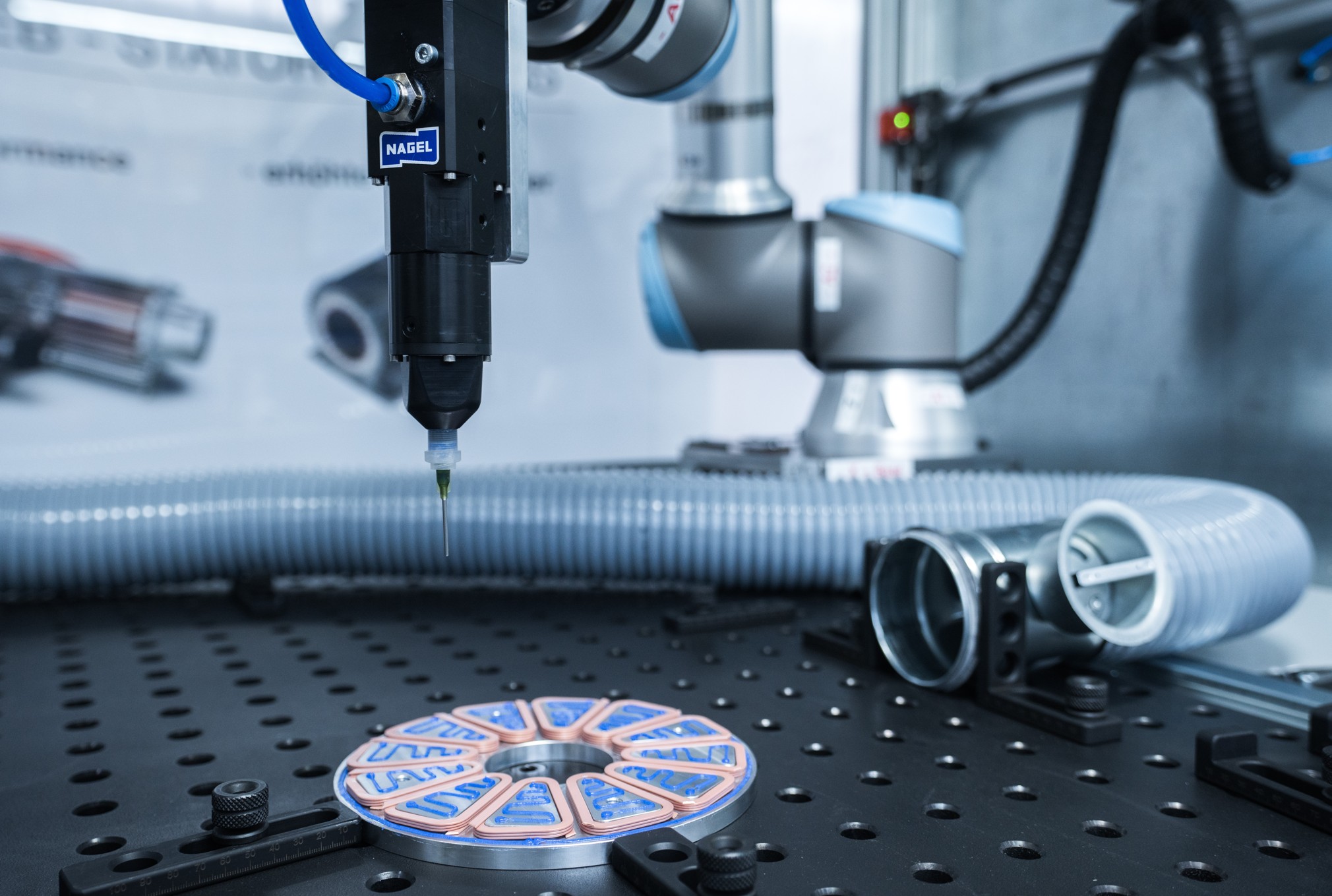
Collaborative robots that can be flexibly applied to a small-volume but large-variety production line, focus on human-robot collaboration and facilitate smart manufacturing are emerging.

Compared to other industries, the level of automation in the automotive industry is much higher. The latest report from Kenneth Research predicts that the shipment and sales revenue brought by collaborative robots in the automotive industry will increase by 43% every year by 2022.

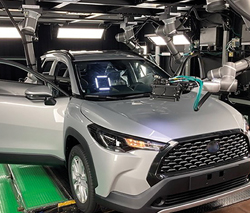
The well-known Japanese car manufacturer adopts Techman robot to process the final quality check of all detailed assembly inspections. Techman Robot helped the customer to install the “next generation smart inspection system” utilizing a customized stand including four Techman collaborative robots. Besides the built-in smart vision, 36 external front and rear cameras were also installed. Moreover, each collaborative robot is equipped with three types of lenses, including short, middle and long. 

Robots Bosses or Slaves?

In the 1990s, could you have imagined the rise of the self-service checkout? This twenty-first century phenomenon is now a common sight in most supermarkets, and despite a few challenges — and more than a few “unexpected item[s] in the bagging area” — they are a change largely for the better.

Like self-service checkouts, industrial robots benefit end-users and businesses. But, what about workers? Nigel Smith, managing director of robotics supplier TM Robotics, argues the case for worker-friendly robots.

Subcategories

Share This

1 2 3 4 5 6 7 8 9 10 11 11